
Just Earth News | @justearthnews | 26 Feb 2020, 05:51 am Print
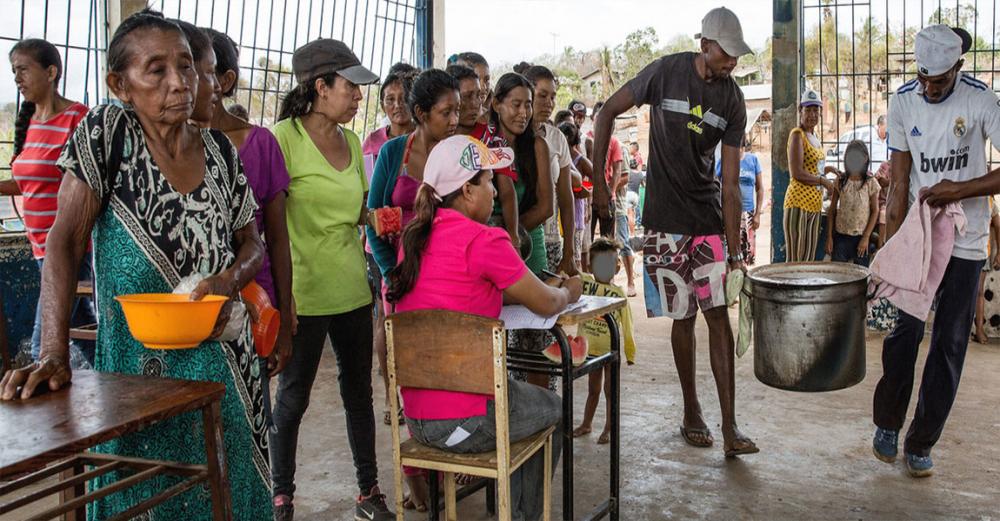
New York : Hyperinflation in Venezuela means that roughly one-third of the population – more than nine million people – do not get enough to eat and are in need of assistance, according to estimates published on Tuesday by the World Food Programme (WFP).
The finding is based on a Food Security Assessment conducted by the agency at the request of the Government between July and September of last year.
“Hyperinflation is affecting the ability of families to secure food and other basic needs,” according to the study.
“Fifty-nine percent of households have insufficient income to buy food and 65 percent are unable to buy other essential items such as hygiene products, clothes and shoes.”
WFP collected data countrywide at the household and community level via more than 8,300 questionnaires, analyzing food consumption patterns, food and livelihood coping strategies, and economic vulnerability.
Results indicate that nearly 18 per cent of households, or roughly one in five, has an unacceptable level of food consumption. Of that number, 12.3 per cent were described as borderline, while 5.5. per cent have poor food consumption.
Additionally, lack of dietary diversity indicated inadequate nutritional intake.
Families consume cereals, roots or tubers daily, complemented with beans, lentils or other pulses three days a week and dairy products four days a week.
Meanwhile, overall consumption of meat, fish, eggs, vegetables and fruits is below three days a week for each of these food groups.
Most families surveyed, or 74 per cent, have engaged in food-related coping strategies such as reducing the variety and quality of food they eat. Sixty per cent reported reducing portion sizes.
To survive, 33 per cent of households have also accepted working for food as payment. Others have sold family assets to cover basic needs, or even spent their savings on food.
WFP said: “As families deplete the coping mechanisms they have been using to sustain basic food consumption, there are great concerns that nutritional needs will not be met in the short term. This will affect the most vulnerable, including children, pregnant and lactating women, and the elderly.”
Photo caption and credit:
NRC/Ingebjørg Kårstad
Food distribution in Venezuela.
- Turkey’s LGBTQ+ crackdown intensifies: 47 detained, activists and gay bars raided
- Hindu minor girls’ emotional plea in Pakistan: ‘We want to go home’ amid abduction, forced marriage case
- Pakistan must end ‘pattern of impunity’ against Ahmadis, UN experts say
- Eiffel Tower strike: Female workers asked to leave during private Hindu group's visit
- Sarah Khalifa sentenced to death: Who is the Egyptian TV presenter at the Centre of drug case?