

Just Earth News | @justearthnews | 11 Nov 2023, 05:39 am Print
 COVID19
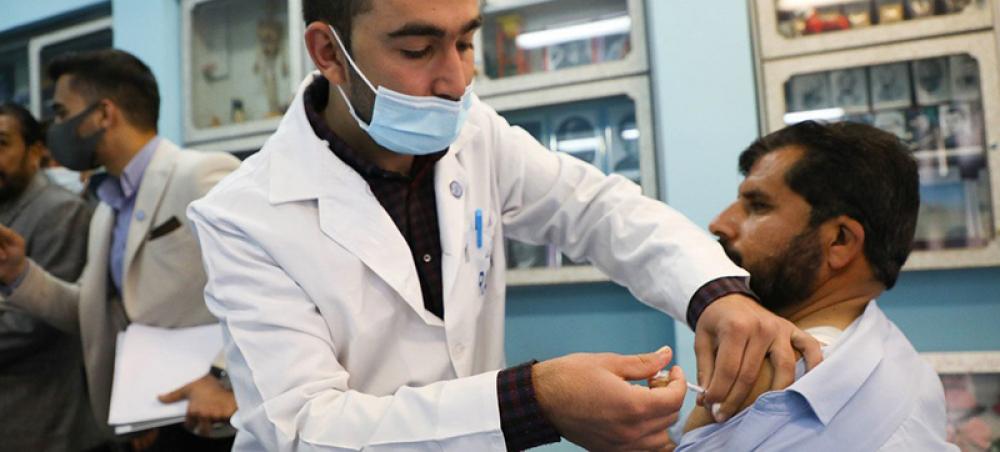
 Teachers at a high school in Kabul Afghanistan are vaccinated against COVID-19. (file). Photo Courtesy: UNICEF/ Azizullah Karimi
The World Health Organization (WHO) has updated its guidelines on COVID-19 treatment, with revised recommendations for non-severe cases of the disease.
The guidance will assist healthcare professionals to identify those at high, moderate or low risk of hospitalization and to tailor treatment accordingly.
WHO said current COVID-19 virus variants tend to cause less severe disease while immunity levels are higher due to vaccination, which has led to lower risks of severe illness and death for most patients.
Hospital risk rates
The update - the 13th since September 2020 - includes new baseline risk estimates for hospital admission in patients with non-severe COVID-19.
The new ‘moderate risk’ category now includes groups previously considered to be high risk, such as older people and those with chronic conditions, disabilities, and comorbidities of chronic disease. Their estimated hospitalization rate is three per cent.
Persons with weaker immune systems remain at higher risk if they contract COVID-19, with an estimated hospitalization rate of six per cent. WHO said most people are in the low-risk category, which has a hospitalization rate of 0.5 per cent.
Treatment recommendations
The UN health agency continues to strongly recommend the antiviral drug nirmatrelvir-ritonavir, known by the brand name Paxlovid, for patients with non-severe COVID-19 who are at high and moderate risk of needing hospital treatment.
In the event it is not available to high-risk patients, the suggestion is to use molnupiravir or remdesivir instead.
WHO also recommends against using molnupiravir and remdesivir for patients at moderate risk, “judging the potential harms to outweigh the limited benefits”.
It also does not recommend any antiviral therapy for people at low risk of hospitalization, saying “symptoms like fever and pain can continue to be managed with analgesics like paracetamol.”
The update also recommends against the use of a new antiviral, VV116, for COVID-19 patients, except in clinical trials.
- Hot tea, hot coffee and cancer: Oxford study raises a new warning
- Taking Ozempic or Wegovy? Study finds possible link to hair loss in men
- Bhutan makes history: WHO declares country free of dog-transmitted Rabies
- Sugar-free but not risk-free? Study raises alarm over popular sweetener
- Type 2 diabetes affects men and women differently: New study unveils a shocking health divide