

Just Earth News | @JustEarthNews | 08 Feb 2018, 04:27 am Print
OCHA/Giles Clarke
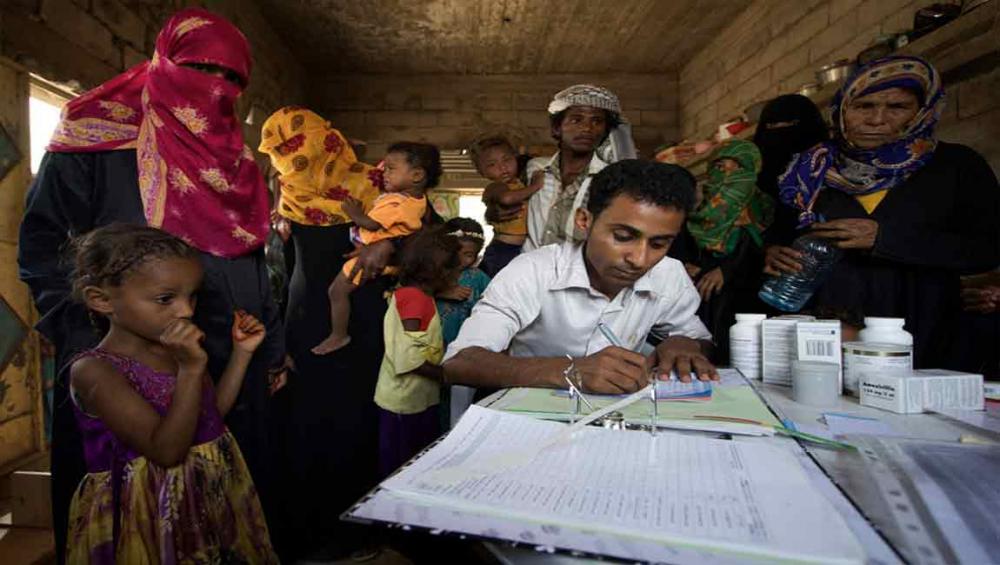
New York, Feb 8 (JEN): With only 50 per cent of medical facilities fully functional in Yemen, the United Nations health agency is striving to fill a “critical” healthcare shortage and will use a $9.1 million emergency response grant to assist 630,000 vulnerable people in districts around Sana'a and al-Hudayda.
The World Health Organization (WHO) is working with partners “to fill critical gaps in the provision of basic healthcare, to respond to disease outbreaks, to strengthen disease surveillance, to distribute medical supplies and to deliver life-saving services to mothers and their children,” said WHO Yemen Representative Nevio Zagaria.
The grant from the UN Central Emergency Response Fund (CERF) will be used to deliver urgent health assistance to 189,000 internally displaced persons and 441,000 people from host communities, including chronically ill people, pregnant and lactating mothers, severely malnourished children, and injured people.
Assistance will be provided in the form of health services close to where they live, including for general services and trauma; child and nutrition care; reproductive, maternal and new-born care; mental health; and treatment for communicable diseases and life-threatening non-communicable diseases.
“CERF funding will provide additional resources help make our work possible at a time of great need for the people of Yemen,” said Zagaria.
With only half of health facilities fully functional, 16.4 million people in Yemen require assistance to ensure adequate access to healthcare, with 9.3 million in acute need. Ongoing outbreaks of cholera and diphtheria have underscored the impacts of a failing health system.
- No need for fast running: Just 10 minutes at walking pace may boost brain function, finds study
- Can eating with your partner help control blood sugar? Study says yes
- 10-hour eating window may be enough for modest weight loss, study finds
- Loneliness could cut healthy years of life by nearly six years: Study
- Ultra-processed food warning: Every extra 100g linked to higher health risks, study finds