
Just Earth News | @justearthnews | 22 Nov 2026, 09:07 pm Print
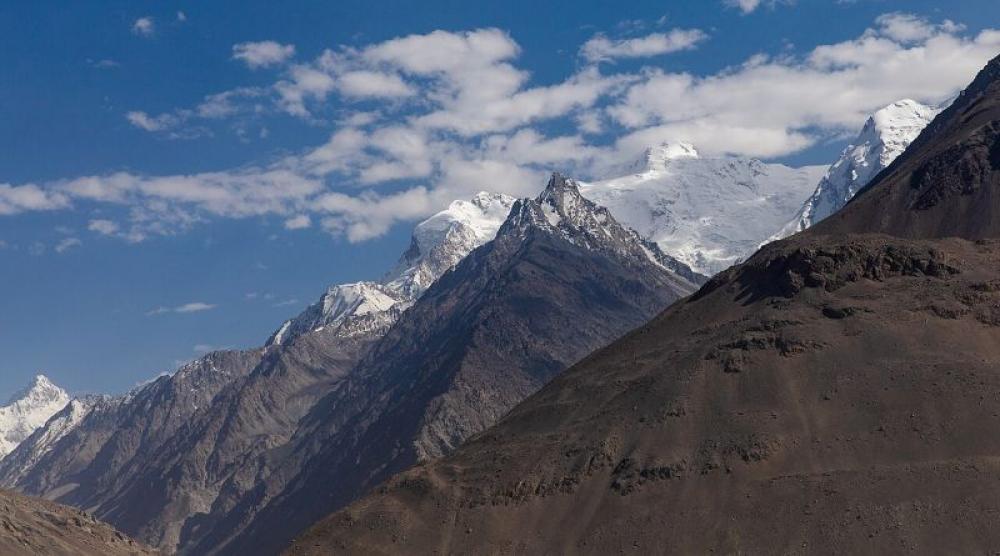
2026 El Niño could bring wetter, warmer conditions, and more hazards in Himalayas. Photo: Wikimedia Commons
A new report by the Kathmandu-based International Centre for Integrated Mountain Development (ICIMOD), Beijing Normal University and the Institute of Atmospheric Physics of the Chinese Academy of Sciences has forecast above-normal precipitation across several countries in the Hindu Kush Himalaya (HKH) region, including Afghanistan, Bangladesh, northern Myanmar and Nepal.
Titled HKH Winter Outlook 2026, the report warns that alongside wetter conditions, parts of the western Himalaya could face localised floods, landslides and avalanches due to heavy precipitation.
The outlook comes amid forecasts by the US National Oceanic and Atmospheric Administration (NOAA) of a strong-to-very-strong El Niño, with an approximately 60 per cent chance of it becoming the strongest recorded since 1950. ICIMOD scientists warn that the weather phenomenon could bring increased rainfall to the foothills and heavier snowfall at higher elevations.
The report follows a monsoon season marked by particularly destructive weather events in Nepal and Bhutan, including disasters triggered by changes in glaciers and permafrost in high-altitude regions.
A devastating rock-ice avalanche that struck Nepal's Rasuwa district in August 2026 is estimated to have cost the country $4.7 billion in relief and reconstruction, according to an assessment by Nepal's National Disaster Risk Reduction and Management Authority.
Lead author of the report, Sarthak Shrestha, emphasised the importance of regional cooperation in preparing for extreme weather events.
"Weather systems and rivers do not stop at national borders, and neither should the knowledge we use to understand them. By combining regional expertise with advanced prediction methods, this outlook gives all eight HKH countries a common picture of the season ahead, which makes it easier to work together across borders," he said.
The outlook also forecasts deeper-than-normal snow cover in parts of Afghanistan, Pakistan, northern India and Nepal. In contrast, shallower-than-normal snow levels are expected in parts of Bhutan and eastern Xizang, China.
Snow depth is a crucial indicator of future river flows and plays an important role in determining the region's water availability for the coming year. Lower snow levels could also affect irrigation and hydropower generation, potentially reducing water flows in springs.
However, a wetter winter does not necessarily eliminate the threat of forest and grassland fires. According to the report, some parts of the HKH region could experience dry spells, leaving grasslands and other vegetation vulnerable to fires. The risk of high to very high forest and grassland fires is particularly elevated in southeastern Xizang and parts of Myanmar.
Manish Shrestha, a hydrologist at ICIMOD, stressed the need for continued preparedness beyond the monsoon season.
"Preparedness cannot end with the monsoon. As rainfall becomes more erratic and intense, local authorities need seasonal outlooks to plan ahead and short-range local forecasts to decide when and where to act," he said.
- COP31 disappointment: UN chief Guterres raises alarm over climate justice
- 'Being human first': Foreign tourists cleaning ganga ghat win hearts online
- No controller, just thoughts! Elon Musk reacts to man playing GTA 6 with Neuralink
- India's Cheetah population rises to 62 after four cubs born in wild
- UN warns of rising climate extremes as global temperatures reach 1.47°C above pre-industrial levels