
Just Earth News | @justearthnews | 25 Sep 2026, 11:55 am Print
 Albanese
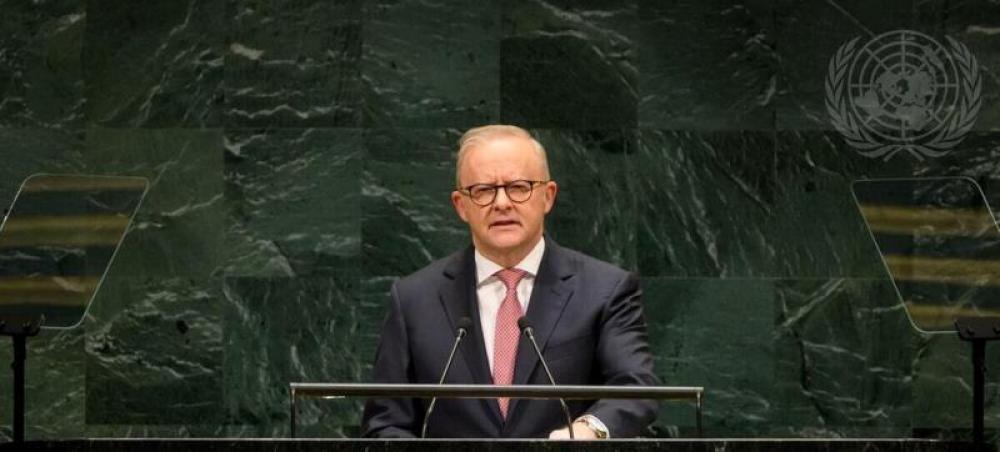
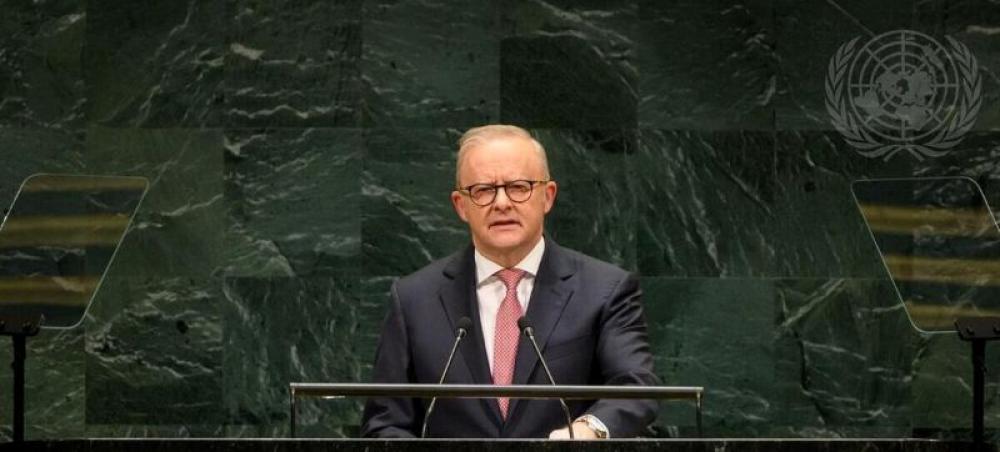
 Prime Minister of Australia Addresses 81st Session of General Assembly Debate. Photo: UN Photo/Loey Felipe
Australian Prime Minister Anthony Albanese on Thursday called for greater international cooperation to tackle the climate crisis, emerging technologies such as artificial intelligence and the erosion of international rules, saying countries must work together to address challenges confronting the world.
Speaking at the United Nations General Assembly, Albanese said cooperating on urgent global challenges, developing solutions that work for citizens and remaining true to the UN's founding purpose “remains the test of our time” — a test that “we can and we must pass”.
The UN was established eight decades ago “from the ruins of war”, when citizens and leaders pledged to work together to prevent another global conflict, Albanese said.
Uniting nations
“We can seize and share and shape the opportunities this moment holds in the interests of our citizens. But we can only do it together,” he said.
Albanese said the UN's mission “cannot be entrusted solely to the great powers or the biggest countries, or even the loudest voices alone”, nor can it “be subcontracted to the world's richest companies or dictated by the pace of technology”.
“Shaping a secure, peaceful and prosperous world is a task for all of us,” he said, adding that Australia is seeking a non-permanent seat on the UN Security Council for 2029-2030.
Promoting wider perspectives
If elected, Australia would “safeguard the rules that protect us all by upholding international law, including the UN Charter and the sovereignty of all States”, Albanese said.
“We will amplify the voices of small States and middle powers to ensure a wider range of perspectives shape the Council's decisions,” he added.
The Australian prime minister said the world is changing rapidly, with issues including climate change, emerging technologies such as AI, and the erosion of trust, civility and social cohesion demanding the full attention of the international community.
He also called for countries to “embrace” change and reform multilateral institutions to meet emerging challenges.
Cooperation, not coercion
“As a middle power, Australia is showing leadership and working with others on fresh ideas to tackle the big issues now facing the world in our region,” Albanese said.
He highlighted his government's efforts to strengthen relationships that help build sovereign capability and give nations greater choice “free from coercion”.
Such partnerships, he said, can help countries address major challenges including economic and energy security, development and transnational crime.
Social media restrictions
Albanese also referred to Australia's decision last year to introduce restrictions on social media access for people under 16, following a campaign by grieving parents who addressed the UN General Assembly and helped turn the issue into a global discussion.
“Already, more than 20 countries are bringing in or have brought in age restrictions on social media,” he said, adding that with the European community also taking action, “there are many more to come.”
- Shehbaz Sharif walks away after question on Hafiz Saeed at UN headquarters
- 'Moral cowards': Netanyahu hits back as delegates walk out during his UN speech
- Trump signs Greenland security pact after months of tensions with Denmark
- Zelenskyy meets Trump at UNGA, says ‘senseless’ Russia war must end before winter
- 'Whoever wins superintelligence wins': Trump unveils bold AI vision at UN