Top pick: US adds Atlanta, Houston to Ebola screening list ahead of World Cup


Just Earth News | @justearthnews | 23 May 2026
#WHO Ebola update #global Ebola risk low #Congo Ebola outbreak 2026 #DR Congo Ebola cases #WHO Congo health alert #Ebola outbreak escalation
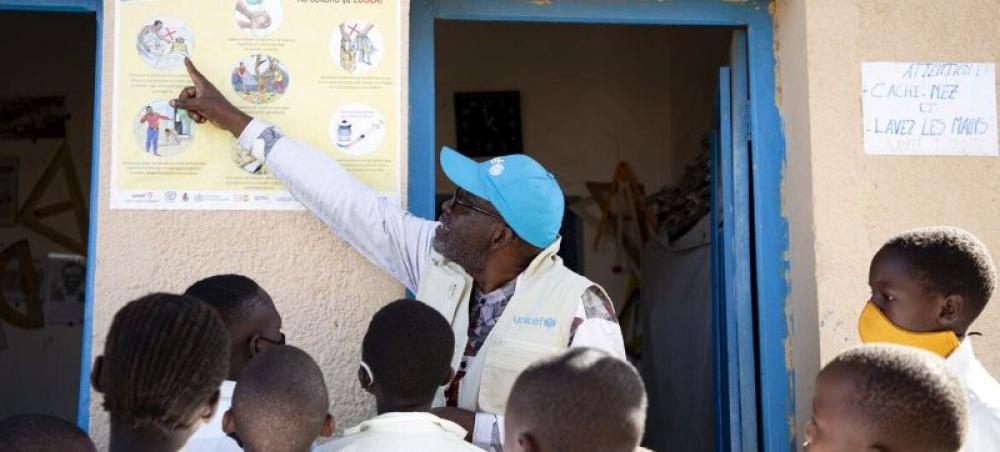
A UNICEF water and sanitation expert explains Ebola prevention measures to students at a primary school in Bunia, Ituri, DR Congo.Photo: UNICEF/Carmel Ndomba Mbikayi
The World Health Organization has raised the public health risk level of the ongoing Ebola outbreak in the Democratic Republic of the Congo from “high” to “very high”, as the virus continues to spread rapidly across the country’s conflict-hit eastern provinces.
WHO chief Dr Tedros Adhanom Ghebreyesus said, however, that the global risk remains “low”.
The United Nations is rushing emergency personnel, supplies and funding into eastern DRC to contain the fast-growing outbreak.
So far, 82 confirmed cases and seven deaths have been officially recorded in DRC. However, WHO warns that the actual scale of the outbreak could be significantly larger, with nearly 750 suspected cases and 177 suspected deaths under investigation.
The outbreak is unfolding amid escalating violence, mass displacement and deep mistrust of outside authorities, worsened by rumours and misinformation.
In a sign of growing tensions, a hospital in Ituri province was set ablaze on Thursday by angry relatives after authorities refused to release the body of a deceased family member due to fears of contamination, according to local reports.
Two Ebola cases linked to travel from DRC have been confirmed in Uganda, including one death.
Two American nationals — including a doctor and another individual identified as a “high-risk contact” — have been transferred to Europe for treatment and monitoring.
The outbreak has been traced to the rare Bundibugyo strain of Ebola, for which there are currently no approved vaccines or treatments.
Only two previous outbreaks of this strain have ever been recorded — in Uganda in 2007 and in DRC in 2012.
WHO said it has deployed 22 international experts to affected areas and released $3.9 million from its emergency contingency fund.
A continental incident management team is also being established in partnership with the Africa Centres for Disease Control and Prevention.
The agency is accelerating work on experimental vaccines and treatments for the Bundibugyo strain.
Tedros said WHO’s research advisory group has recommended prioritising two monoclonal antibodies for clinical trials, along with testing the antiviral drug Obeldesivir for high-risk contacts.
Tedros stressed that rebuilding confidence among affected communities will be key to containing the outbreak.
“Building trust in the affected communities is critical to a successful response, and is one of our highest priorities,” he said.