Top pick: Netanyahu bloc falls short of majority in Israel election, exit polls show


Just Earth News | @justearthnews | 27 Oct 2026
#Israel election #Benjamin Netanyahu #Gadi Eisenkot #Israel election results #Israeli election exit polls #Knesset #Netanyahu coalition #Arab parties Israel #Israel voter turnout
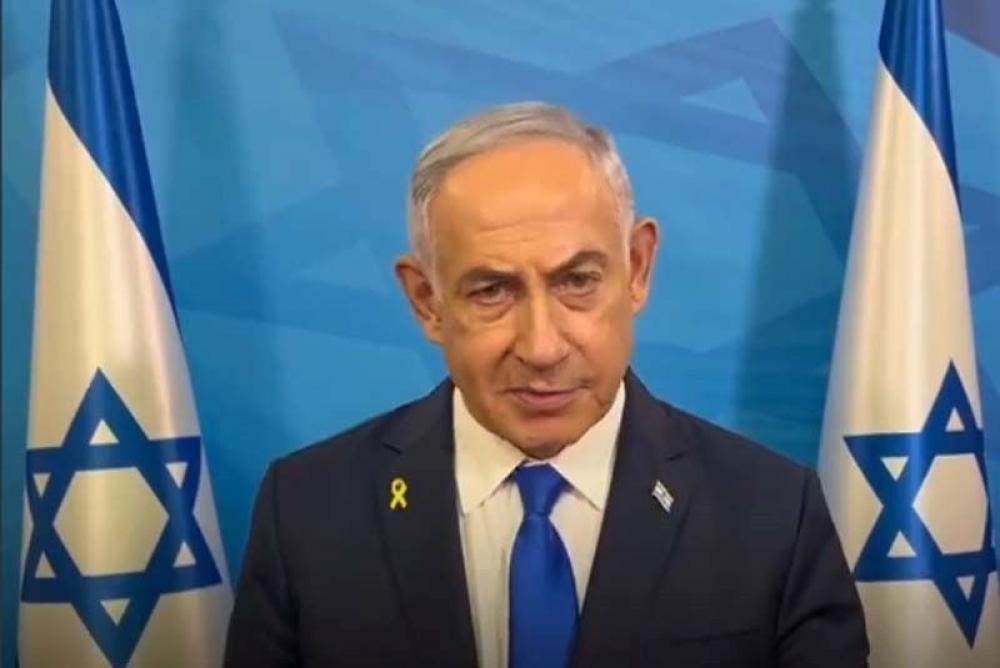
Final result of the Israeli polls is expected to be released in next 48 hours. Photo: X page videograb
Israel's election has failed to produce a clear winner, with exit polls showing neither Prime Minister Benjamin Netanyahu nor his main rival, Gadi Eisenkot, securing enough seats to command a parliamentary majority.
Despite a narrow lead, Netanyahu's coalition fell short of the 61 seats required to form a government in Israel's 120-member parliament, the Knesset.
Initial exit polls released by the country's three major television networks — Channel 11, Channel 12 and Channel 13 — projected Netanyahu's bloc to win just 50 seats, while Jewish-led opposition parties were forecast to secure 52 seats. Both blocs remained below the 61-seat threshold needed for a majority, The Times of Israel reported.
The balance of power is now expected to hinge on the role of Arab parties, which were projected to win a combined 18 or 19 seats, potentially giving them significant influence over coalition negotiations.
Meanwhile, voter turnout reached its highest level in decades. Turnout stood at 77.7% when polling stations closed at 10 p.m. local time (2000 GMT), the highest figure recorded by that hour since 1999, according to Israel's Central Elections Committee, as reported by the BBC.
Once the final results are confirmed, Israel's president will consult political factions before inviting the party leader deemed most likely to form a government to attempt to build a governing coalition. The process could take several weeks.
If the designated candidate fails to secure sufficient support, another candidate may be given an opportunity. Failure to form a government could ultimately lead to another election.
Tuesday's vote was the first Israeli general election since the Hamas-led attack on Israel on October 7, 2023, triggered the war in Gaza.
Key campaign issues included accountability for the security failures that preceded the October 7 attacks, the conduct of Israel's regional military campaigns, the growing burden of military service, judicial reforms and the country's international standing.