Top pick: US targets Microsoft, Infosys, TCS in Green Card crackdown. How will it impact IT employees?


Just Earth News | @justearthnews | 08 Oct 2026
#US Green Card crackdown #Microsoft Green Card suspension #Infosys Green Card news #TCS Green Card programme #Wipro H-1B visa #Cognizant Green Card
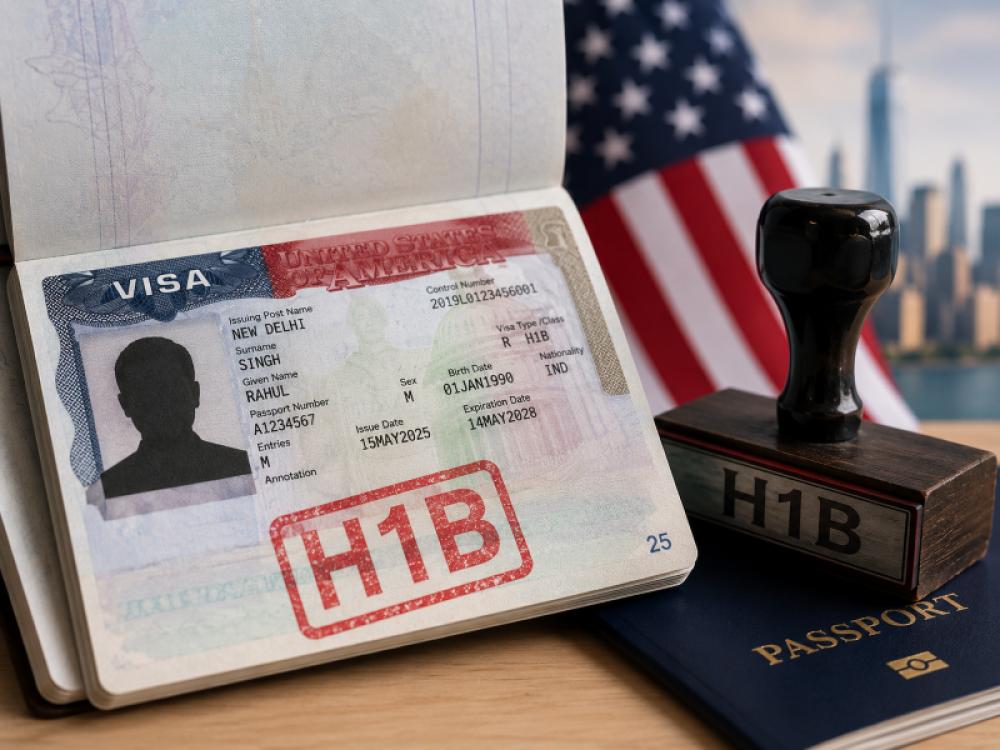
US announces suspending several major IT firms from Permanent Labor Certification Program. Photo: ChatGPT Recreated
The United States Department of Labor (DOL) has suspended several major technology companies, including Microsoft, Infosys and Tata, from participating in the Permanent Labour Certification (PERM) programme, citing concerns that foreign hiring practices could adversely affect American workers.
The programme is a crucial step in the employer-sponsored Green Card process for foreign professionals seeking permanent residency in the United States.
US Labour Secretary Keith Sonderling announced that the department would stop accepting or processing new applications under the programme from several companies, including Cognizant, Infosys, Capgemini, Tata, Wipro and HCL. Adobe and Microsoft were also suspended, reportedly due to multiple active federal investigations.
“Since 2009, just these companies alone have requested almost 3 million foreign workers. They’ve received over 230,000 H-1B visa approvals and over 100,000 permanent labour certifications. That’s hundreds of thousands of jobs that were taken from American workers,” Sonderling was quoted as saying by CNBC.
The announcement comes as the administration of US President Donald Trump intensifies its scrutiny of immigration and foreign hiring programmes ahead of the November midterm elections.
US Vice President JD Vance has criticised Microsoft over its decision to lay off approximately 6,000 employees in 2025, alleging that the technology giant replaced American workers with H-1B visa holders.
Thank you @Sonderling47, @AGToddBlanche, @StephenM, @AFergusonFTC, and @USLaborIG for this major effort in the fight against fraud. It’s time these jobs that were stolen from American workers finally go to Americans, and this step is going to make sure the wrongs of the past are corrected.
— JD Vance (@JDVance) October 8, 2026
“So we’re going to continue to support Microsoft and have a great relationship with Microsoft, but we’re also going to deny them the ability to apply for these permanent residencies until they show that they are going to get serious about putting American workers first,” Vance was quoted as saying by CNBC.
Microsoft, however, defended its hiring practices, stating that the vast majority of its US employees are American citizens.
“We believe in the strength and talent of the American workforce. That is why the vast majority of Microsoft employees in the United States are Americans,” the company said in a statement.
Microsoft added that most of its H-1B filings involved existing employees rather than new hires.
“Of the approximately 6,000 H-1B visa applications we submitted in the last fiscal year, 80% were to extend or change the status of existing Microsoft employees,” the company said.
It further clarified that the remaining applications were for individuals already legally present in the United States who chose to join Microsoft, adding that they accounted for only 1% of its US workforce.
“They are not new arrivals to our country,” the company said.
Microsoft also maintained that it filed H-1B petitions only for candidates who met the visa category's eligibility requirements. The company said it paid its employees among the highest salaries in the technology sector and that H-1B workers received the same compensation as other employees performing comparable work.
The development could affect thousands of Indian technology professionals who rely on employer-sponsored Green Cards to secure permanent residency in the United States after entering the country on H-1B visas, according to an NDTV report.
However, the suspension of the PERM labour certification programme does not automatically cancel an employee's existing H-1B status.
Instead, it could disrupt or delay an employer's ability to move eligible foreign workers through a crucial stage of the employment-based Green Card process.
Indians constitute one of the largest immigrant communities in the United States. According to estimates published by the US Census Bureau, approximately 5.2 million people in the country identified as Indian in 2023.
Indian Americans are the second-largest Asian-origin population in the United States, accounting for approximately 21% of the country's Asian population, according to the Pew Research Center.
The Permanent Labour Certification programme, commonly known as PERM, is administered by the US Department of Labor. It enables an employer to seek certification to hire a foreign worker for a permanent position in the United States.
In most cases, an employer must obtain labour certification from the DOL before filing an immigrant petition with the Department of Homeland Security's US Citizenship and Immigration Services (USCIS).
The department must certify that there are not sufficient US workers who are able, willing, qualified and available to accept the job opportunity in the intended area of employment. It must also determine that employing the foreign worker will not adversely affect the wages and working conditions of similarly employed American workers.
According to the DOL, the PERM programme was redesigned to improve processing and services for employers and other stakeholders. The department published a final regulation on December 27, 2004, introducing the re-engineered system, which came into effect on March 28, 2005.
Under the revised system, employers were required to file new applications using Form ETA 9089 instead of the earlier ETA Form 750. Applications submitted under the previous regulations continued to be processed under the rules applicable at the time of filing.
The DOL processes applications for Permanent Employment Certification, Form ETA 9089, with certain exceptions, including Schedule A occupations and sheepherder applications.
The date on which the DOL receives a labour certification application is known as the filing date. It is used by USCIS and the US Department of State to establish the applicant's priority date.
Once the labour certification is approved, the employer can submit it to the appropriate USCIS service centre along with Form I-140, the Immigrant Petition for Alien Workers. The certification is valid for 180 days and must be submitted to USCIS within that period.
For many foreign skilled professionals, PERM serves as a critical link between temporary employment in the United States and the pursuit of permanent residency through an employer-sponsored Green Card.